|
From Disruptive Protests to Disrupted Networks? Polarization in the German Twitter/X debates on Fridays for Future and Letzte Generation
Disruptive climate protests are often accused of dividing public debate instead of advancing it. We put this claim to the test by comparing the German Twitter/X debates about two climate movements: Fridays for Future (FFF) and the more disruptive Last Generation (Letzte Generation, LG). We ask to what extent each debate produces networks that are ideologically divided and hostile towards each other.
The analysis covers about 5 million German-language posts from around 200,000 accounts, published in 2022 and 2023. We combined automated content and network analysis with a manual content analysis of 2,830 items, which identified the frames in the most widely shared posts and the types of users who amplified them. A neural network classifier detected hate speech and offensive language, so that we could measure how toxic the interactions between the camps were.
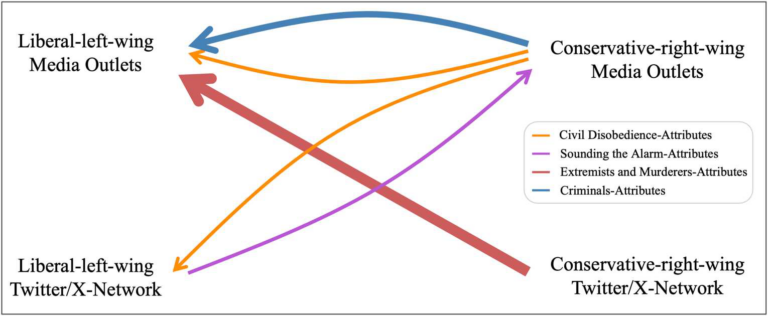
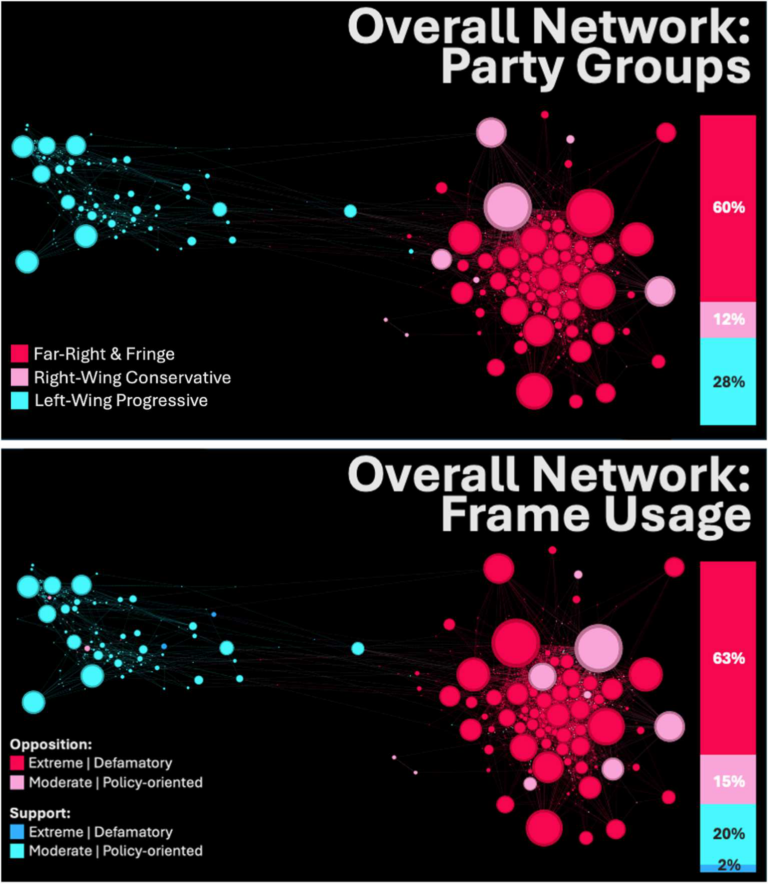
Both debates are polarized, but in different ways. Posts about LG generated nearly ten times more user engagement than posts about FFF. The FFF debate was predominantly supportive (71 percent support, 29 percent opposition), and its supporter communities were larger and more diverse. The LG debate was almost evenly split (53 to 47 percent), its network clusters were less diverse, and fewer political and journalistic actors stood on the side of the protesters. Extreme frames that discredit the protests circulated mainly in right-wing communities, while left-leaning users mostly stressed the urgency of climate action or the legitimacy of the protests.
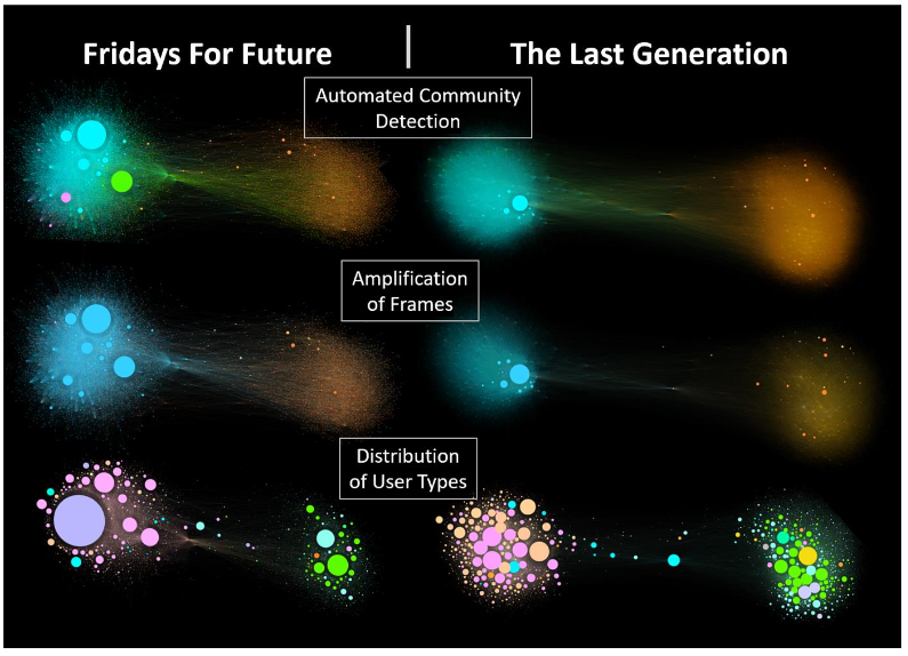
Hostility between the camps is asymmetric. Toxic language was twice as frequent when opponents of the protests addressed supporters as it was within the opponents’ own communities. Supporters showed no comparable increase when they addressed opponents. This gap was twice as pronounced in the LG debate as in the FFF debate.
We conclude that disruptive protest produces two kinds of connective action. On the one hand, a supportive network defends the protesters and their goals more strongly than in debates about non-disruptive protest. On the other hand, an antagonistic backlash network forms, led by right-wing and conservative users, which we call connective counteraction. The resulting polarization is asymmetric, because it is driven mainly by the antagonists. Disruptive protest attracts a great deal of attention, but it also diverts the debate away from climate policy and widens antagonistic networks.
Meyer, H., Pröschel, L., & Brüggemann, M. (2025). From disruptive protests to disrupted networks? Analyzing levels of polarization in the German Twitter/X debates on “Fridays for Future” and “Letzte Generation”. Social Media + Society, 11(2), 1–16. https://doi.org/10.1177/20563051251337400