|
Echoes of Dissent: How polarized frames of climate protesters travel between social media and legacy media
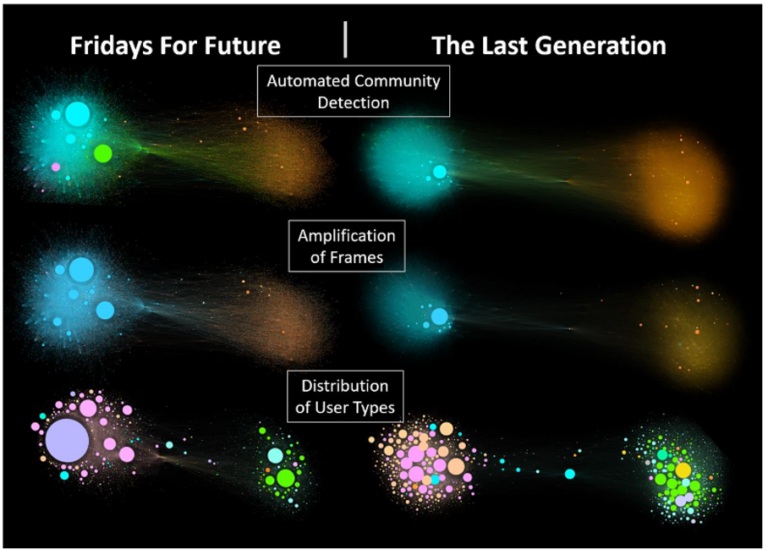
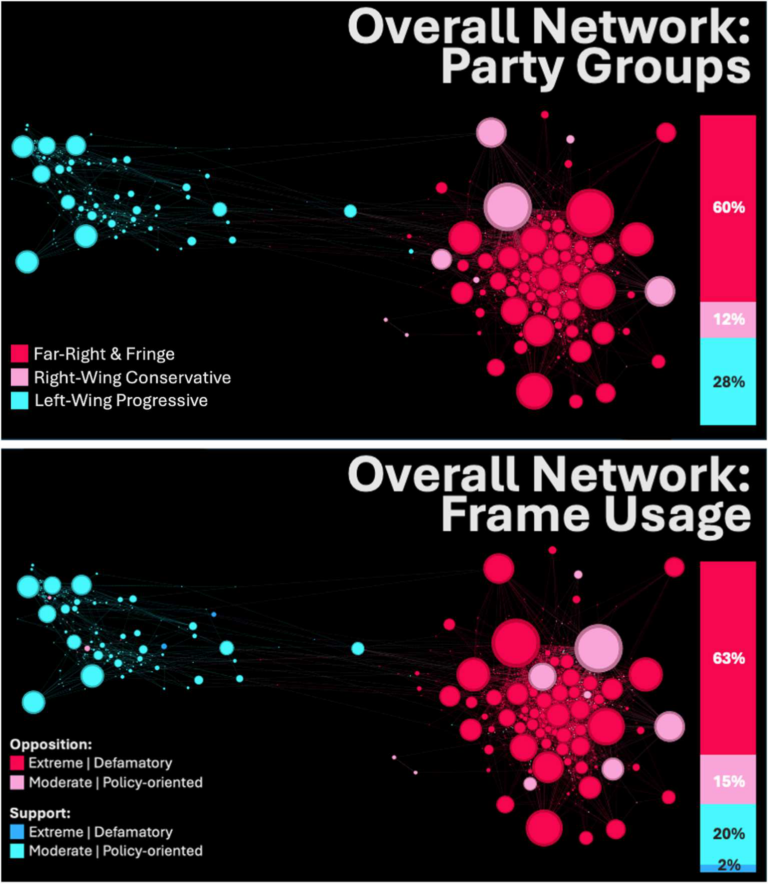
Disruptive climate protest regularly sparks debates about whether such protest is legitimate and legal. In Germany, the group Last Generation (Letzte Generation, LG) became the focus of one of the most heated debates of this kind. On Twitter/X, earlier research had identified two opposing networks: one supporting the group and one attacking it. In this study, we ask how the polarized frames of these two networks move into legacy media coverage. Do news outlets mainly echo the frames of their own political camp, or does polarization travel along different paths?
We analyzed around 1.5 million tweets and about 2,500 articles from nine national news outlets published between January 2022 and May 2023. The outlets range from taz and Süddeutsche Zeitung to Frankfurter Allgemeine Zeitung, Welt, Bild and Junge Freiheit, which is considered a voice of Germany’s far right. Based on the most amplified tweets of both networks, we reconstructed six polarized frames. Three are supportive: Civil Disobedience, Climate Protection and Sounding the Alarm. Three are antagonistic: Criminals, Apocalyptic Sectarians, and Extremists and Murderers. The supportive frames speak about the protest and the climate crisis, whereas the antagonistic frames target the activists themselves. We traced the typical vocabulary of these frames in both arenas with dictionaries, used time-series analysis to see which arena moves first, and read 360 articles closely to understand how the frames are actually used.
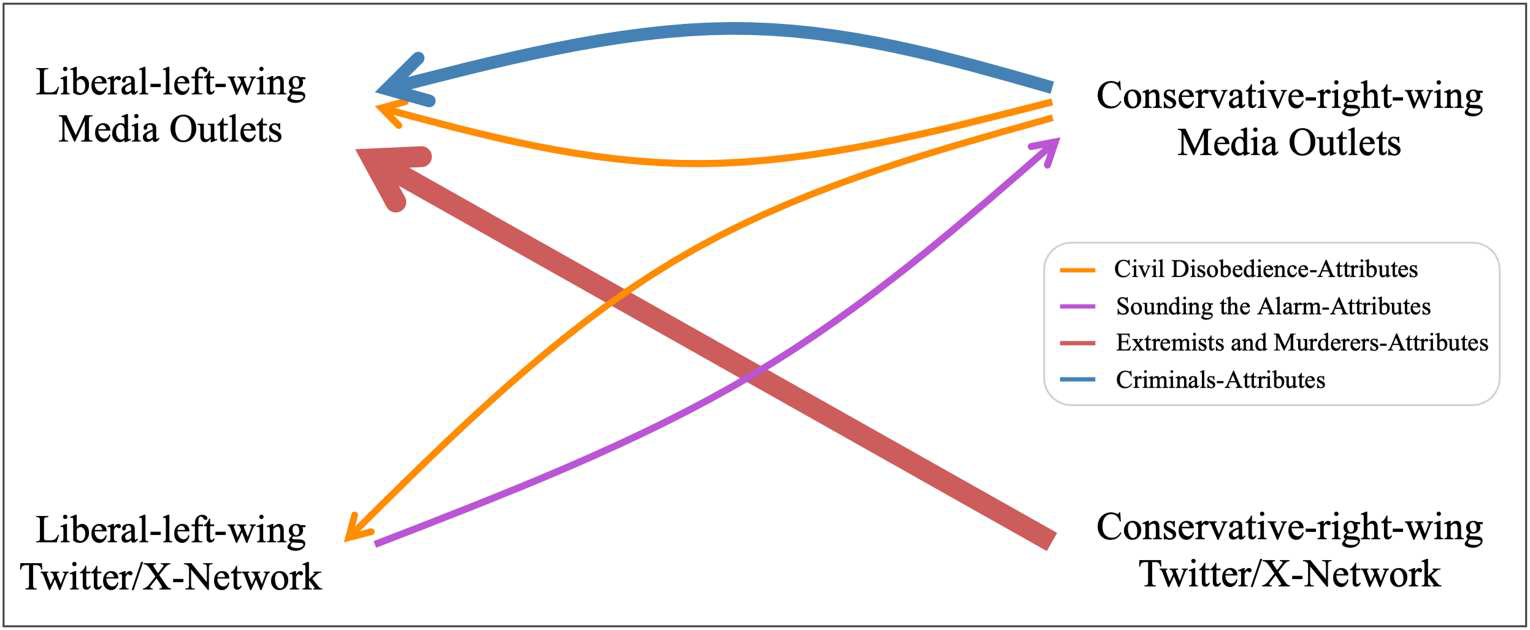
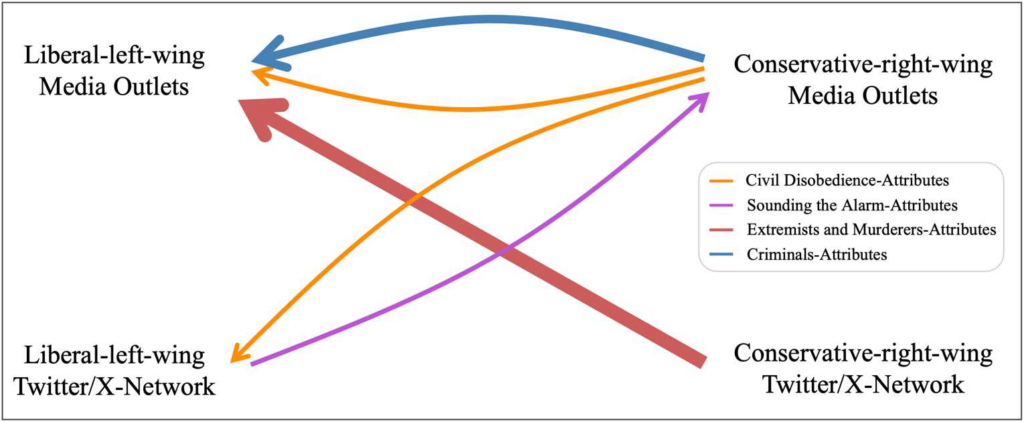
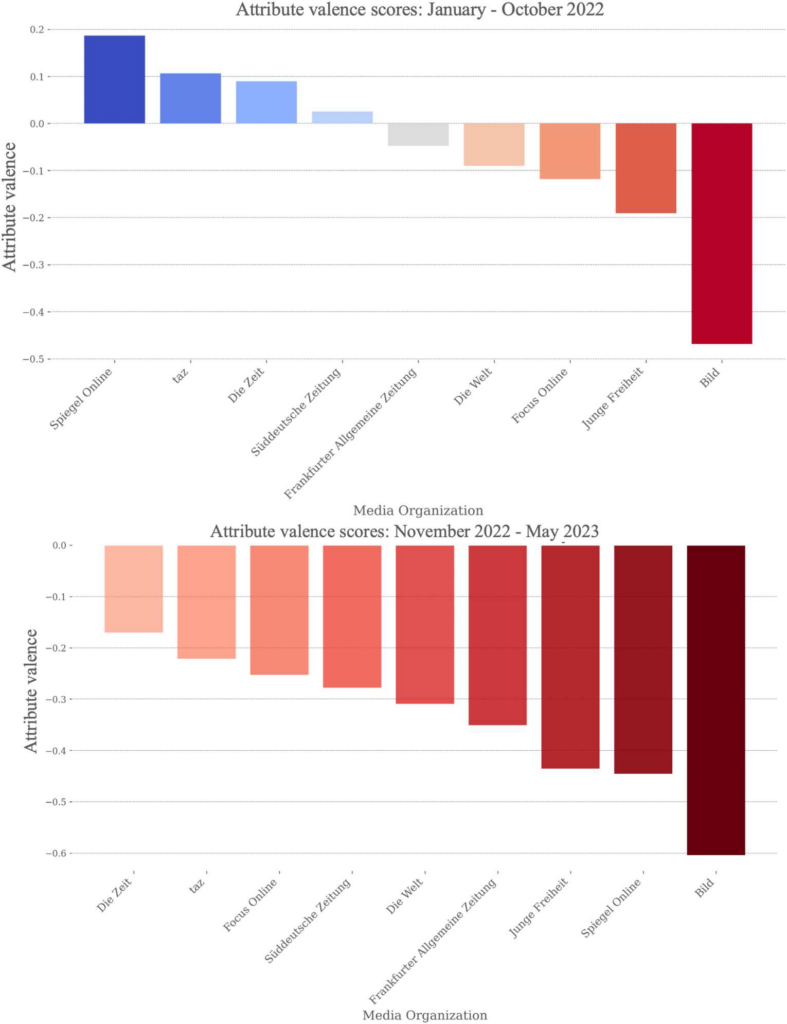
The language of legacy media mirrors the divide on Twitter/X: liberal-left outlets use more supportive vocabulary, conservative-right outlets more antagonistic vocabulary. Shifts on Twitter/X tend to precede shifts in news coverage, while the reverse effect is much weaker. The surprising part is the route. Polarized vocabulary does not spread within ideological camps. It spreads across them. The turning point was the death of a cyclist in Berlin in late October 2022, which was prematurely linked to an LG road blockade. Later reporting clarified that the activists were not responsible. In the aftermath, conservative-right actors on Twitter/X and in the press intensified frames of criminality and extremism, up to the comparison with a “climate RAF”. Liberal-left outlets took up these frames mostly to put them into context or to refute them. Still, the overall tone of coverage became more negative, including in liberal-left outlets.
We call this dynamic discursive backlash: content introduced by one political pole is taken up by the opposing pole through contestation, and the act of challenging it reproduces its vocabulary and extends its reach. The dynamic is asymmetric, because whoever introduces a frame sets the terms on which others respond. In the debate on LG, conservative-right actors held this position. For journalism, this creates a dilemma. Ignoring extremist characterizations has democratic costs, but contesting them also amplifies them. The primary responsibility lies with those who introduce such frames. The open question for newsrooms is how to contest them without carrying them further.
The study covers one protest group in one country, and the time-series analysis shows which arena moves first, not strict causation. Whether the same backlash dynamic appears in other media systems, on other platforms and for other contested issues remains to be tested.
Pröschel, L., Meyer, H., Farjam, M., & Brüggemann, M. (2026). Echoes of dissent: Intermedia frame-setting between social media and legacy media in the debate over climate protesters in Germany. Journalism Studies. https://doi.org/10.1080/1461670X.2026.2759674